



Onderzoek
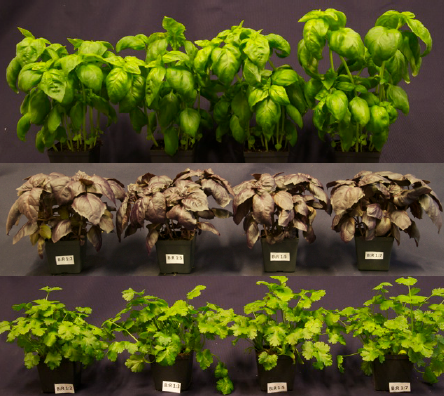
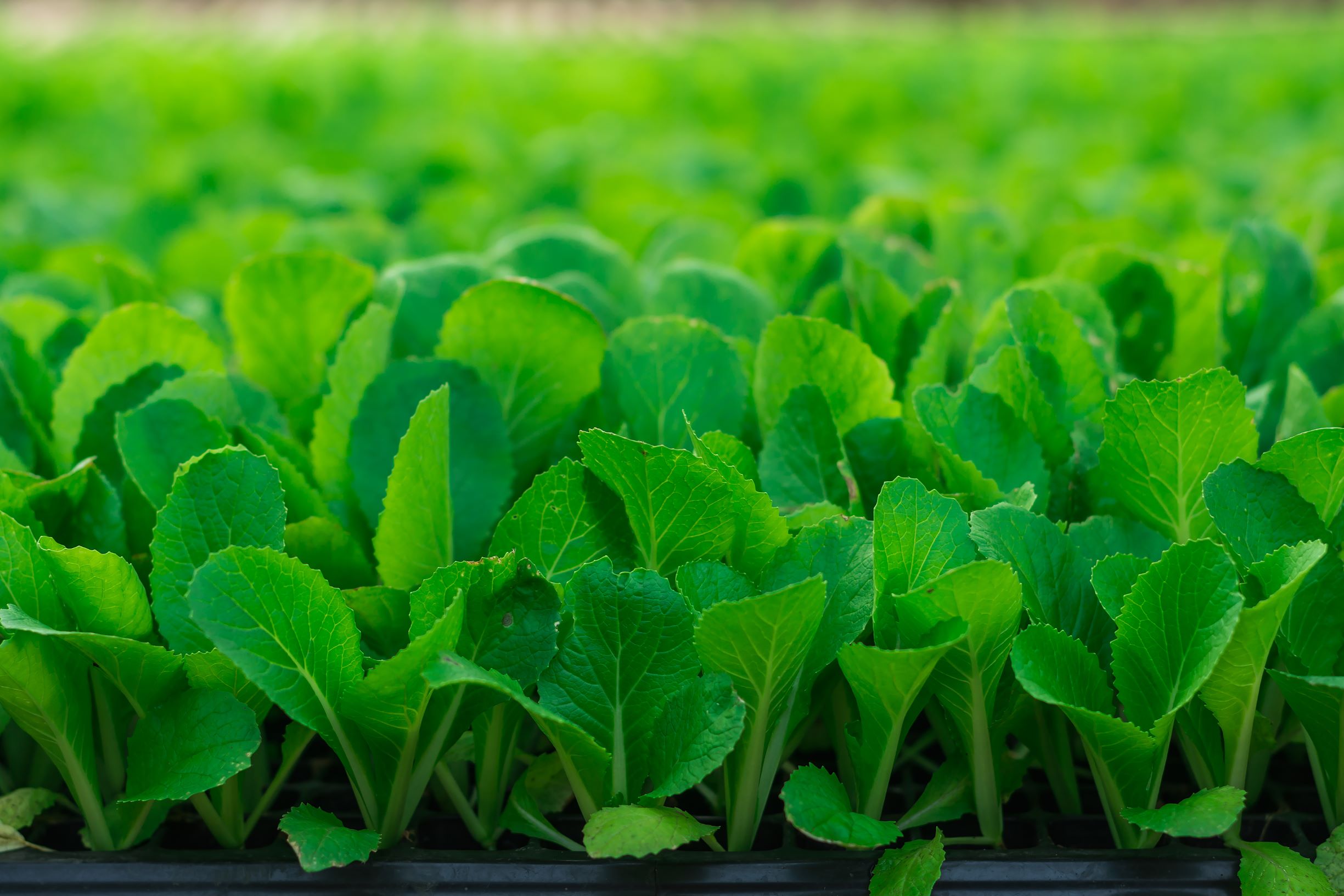
Ida Fallström, expert op het gebied van planten en licht, en Daniel Bånkestad, onderzoeksmanager bij Heliospectra, vergeleken de groei van kruiden en bladgroenten onder verschillende energiezuinige LED-lichtregimes.
Introduction
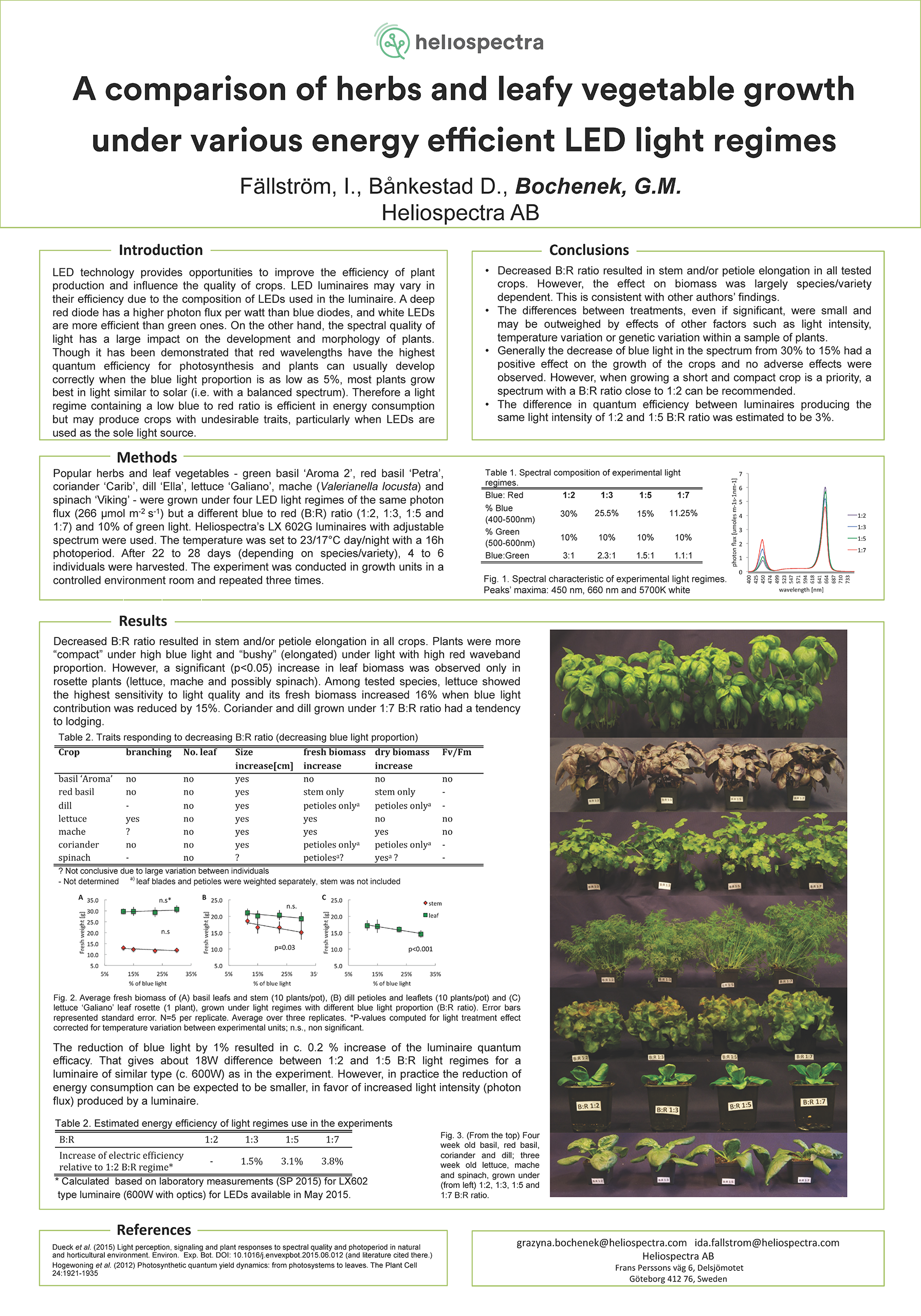
LED technology offers opportunities to enhance plant production efficiency and crop quality. LED luminaires’ efficiency varies based on the LED composition; for instance, deep red diodes deliver higher photon flux per watt than blue diodes, and white LEDs outperform green ones. However, spectral light quality significantly influences plant development and morphology. While red wavelengths are highly efficient for photosynthesis and plants can thrive with as little as 5% blue light, most plants flourish under solar-like balanced spectra. Hence, a low blue-to-red ratio light regime saves energy but may yield crops with undesirable traits, especially when LEDs are the sole light source.
Conclusions
- Reducing the B:R ratio led to stem/petiole elongation in all tested crops, in line with other studies.
- Though treatment differences stood out, they could be eclipsed by factors like light intensity, temperature shifts, or genetic diversity.
- Lowering blue light from 30% to 15% generally boosts crop growth without adverse effects, recommending a 1:2 B:R ratio for compact growth.
- The quantum efficiency difference between 1:2 and 1:5 B:R ratio luminaires at the same light intensity was about 3%.
Gerelateerde inhoud
Strategieën voor kasverlichting bij het verplanten en afwerken van groenten
Growing lettuce, herbs and vegetables in your greenhouse? Dr. Roberto Lopez of Michigan State University
Kassen: Het nieuwe normaal na COVID-19
Hear from greenhouse operations and facilities managers about how companies are keeping their teams connected,
Het fenomeen verrood - webinar
Ontdek de best practices voor verrood licht met experts van Heliospectra, Delphy en Gold Leaf Technologies.