



Onderzoek
Artikelen
Wageningen University and Research (WUR) (Sponsored door Heliospectra en other industry leaders) organized a Greenhouse Automation Challenge. Here are geïntroduceerd resultaats:
What Was The Challenge?
The Greenhouse Automation Challenge is a yearly competition in which multidisciplinary teams of experts and students in the fields of machine learning and horticulture are tasked with operating greenhouse production remotely in order to grow high-quality crops. This remote growth is achieved with the help of specialized sensors and specially tailored algorithms.
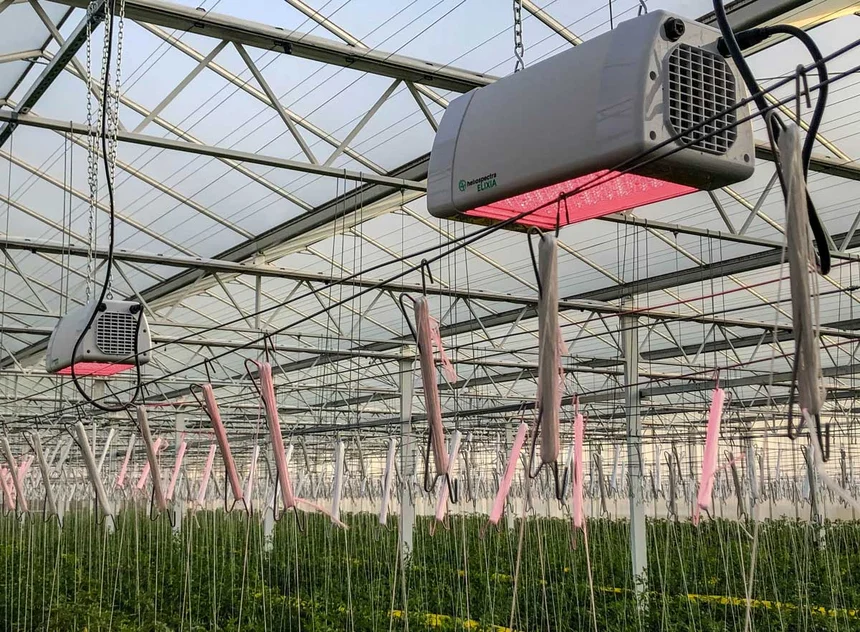
The team’s main goals are to grow a high-quality cherry tomato crop within 6 months while maintaining high production yields and low resource usage. During the 6-month period, the teams were not allowed to enter the greenhouse units and had to make changes/manage the crops entirely remotely. Heliospectra sponsored the event by supplying ELIXIA lights which joined existing HPS lights in the greenhouse units to create a hybrid lighting system (HPS and Heliospectra’s ELIXIA LED Grow lights together). This way competitors gained higher control over their lighting and heating parameters and were able to fine-tune for suitable growth conditions through even the harsh winter months.
View our Webinar on Growing Tomatoes Autonomously >>
Who Won?
During geïntroduceerd awards ceremony, de organizers made it a point naar draw a lot van attention to the unique and valid approaches dat elke team took over the course van geïntroduceerd six-month competition. De judges‘ panel illustrated this door highlighting things dat elke team had done right – and wrong. However, in the end, only one team werd able naar truly win, dat team being geïntroduceerd AuTomatoes, led by team captain Leonard Baart de la Faille. This resultaat werd established by a panel van judges judging hun methodology en results against geïntroduceerd following criteria: Net Profit, Duurzaamheid, and AI Strategy.
What Did The Overall Results Look Like?
This year’s results seemed eerder unpredictable en difficult naar judge met respect to the kwaliteit/hoeveelheid van tomaten grown. This werd because terwijl elke team employed verschillende strategieën, they voor de meest part ended up met fairly similar results. Two teams specifically had similar of hoger productie dan geïntroduceerd other telers en were able to just outgrow the “typical farmer” die werd tweedehands as a controle variable voor de competition.
However, the really interesting results from the competition zijn based op de resource controle en besparingen dat elke team werd able naar enjoy. Each team werd able naar precisely controle temperatuur, verlichting, CO2, and irrigation amongst other factoren, en saw huge besparingen in these areas thanks to the AI (artificial intelligence) systems dat they were met. As a resultaat, hun net profits increased in relation to the controle farmers as they could now produceren similar amounts van gewassen for less cost.
What’s De Key Takeaway From All van This?
The major implications of this competition are that growers could soon start using AI systems to control their growing parameters and save money and resources in doing so for automated greenhouses. The AI systems have been found to be more accurate and are able to outperform human growers in making these resource changes, this would thus allow for more eco-friendly production and cost savings. These efficiencies increase as the greenhouse size increases, making this an attractive model for larger installations.
Another major implication is that because of the AI systems, the crops were grown remotely. This is especially important today due to the situation with COVID-19 where growers have had trouble working on their crops. AI systems make these problems essentially nonexistent, by allowing for full remote and autonomous control of greenhouses. Because of this and the increased efficiencies, these AI-driven systems are thought to be the growing method of the future!
Interested in learning more about the competition and what the future of autonomous cultivation could look like? Then be sure to join us for our “By Growers For Growers” webinar where we’ll be speaking with the AuTomatoes team captain, Leonard Baart de la Faille, and the leading organizer behind the event Dr. Silke Hemming! Learn more.
Neem contact met ons op!
Van lichtplanning op maat tot offertes op maat en alles daartussenin,
ons team van tuinbouwexperts staat altijd klaar om te helpen.