

Onderzoek
Artikelen
In onze recent interview met Ida Fällström, Research Manager at Heliospectra, wij gained insights into how spectrum designs zijn built voor de purpose van bereiken specifiek groei doelen op specifiek groei fasen.
Ida oversees our in-house Plant Lab and conducts both research and commercial crop trials to assess light strategies, plant health, and crop performance. Her focus is on learning and understanding the light your plants need to thrive and achieve your desired production outcomes.
Q: What is a Spectrum?
ida:
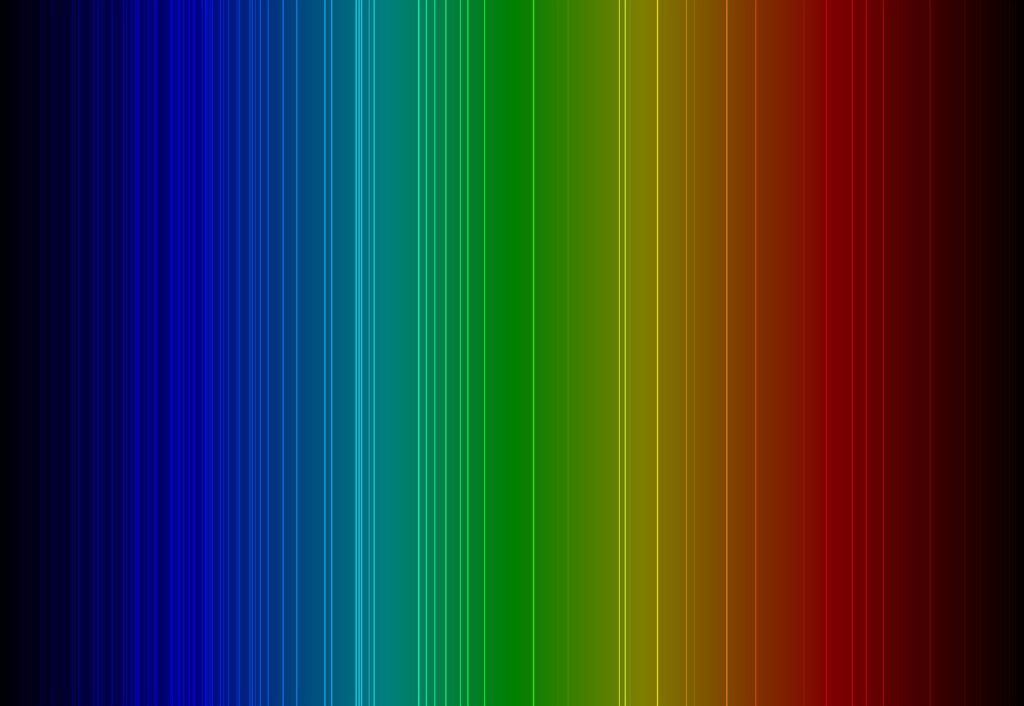
A licht spectrum is the range van wavelengths from a licht source, dergelijke as a kweken licht. Licht kan appear verschillende between fixtures, depending op de ratio van colors, or how the colors in the spectrum zijn weighed against elke other. De ratio van licht in een fixture’s spectrum is the reason waarom some lichten appear meer red or blauw, terwijl others kan appear white met warm, cold, of natuurlijk tones. One van geïntroduceerd meest belangrijk features van a kweken licht lies hier, in the color van geïntroduceerd licht, as the spectrum mei invloed geïntroduceerd ontwikkeling, groei, en kwaliteit van je gewas.
Q: What is the impact van geïntroduceerd ratio van licht colors in a spectrum?
Ida:
Overall, the ratio van colors in the licht dat planten receive kan strongly invloed hun ontwikkeling. De blauw, green, and red spectral range (400-700 nm and possibly beyond) is referred to as photosynthetically active radiation (PAR) and represents geïntroduceerd range van licht dat planten gebruik voor fotosynthese. Within PAR, the meest effective licht is in the red region (600-700 nm), followed by the blauw (400-500 nm), and dan the green (500-600 nm). The licht outside van PAR, inclusief UV (260-380 nm) and far-red (700-800 nm), is ook relevant to plants, dergelijke as far-red influencing bloeiend en perfecting texture.
Plants not only gebruik licht voor energie, they ook gebruik licht as a signal dat supplies information about hun groei omgeving, die kan trigger different responses in een gewas. Voor instance, a hoog ratio van blauw kan promoten compact groei in sla, whereas inclusief far-red in the spectrum kan promoten hoogte and an expanded leaf area. Far-red is ook tweedehands voor bloeiend gewassen to speed up bloeiend and to onderhouden normal ontwikkeling. So, looking op how geïntroduceerd ratio van licht in een spectrum kan zijn tweedehands, it kan help aandrijving fotosynthese and it kan ook prompt desired groei responses.
Q: What is a Spectrum Design?
Ida:
In agriculture, a spectrum design is a spectrum tailored naar bereiken specifiek gewas and/or productie doelen. At Heliospectra, onze spectrum designs zijn geïntroduceerd culmination van years van research and verlichting proeven, conducted in-house and in cooperation met numerous telers, research institutes, en educational institutions, to determine geïntroduceerd effects van licht in various gewas en groei environments. Our spectrum design ontwikkeling spans all the way van academia naar application, from the research bench naar reality.
Different crops and growth stages require different spectra to induce specific growth responses. To evaluate which light triggers which growth responses, we have investigated numerous spectra, where we have altered the ratios between wavebands, such as blue: red or red:far-red, on different crops in both greenhouse and sole-source environments.
A spectrum can affect different growth characteristics, including plant health, root development, fresh weight, flowering yield, fruiting, flavor, compactness, color, and nutrition.
The ultimate objective of a spectrum design is to provide the ideal light to achieve the desired growth goals in the most efficient way possible for the grower.
Q: What is meant by the term “groei doelen” and what spectra kan zijn applied naar help meet those doelen?
Ida:
Growth goals are the traits the grower is aiming for with respect to crop quality, such as height, color, flavor, compounds, flowering, and others I have mentioned. Growth goals can also include production objectives, such as increasing crop yield or speeding up time to market.
At Heliospectra, we work with our growers to define their goals, like achieving greater plant height, and we evaluate how different spectra affect height in their particular crop at a particular growth stage, in order to suggest the right spectrum for their needs.
Q: How kan LED technologie and research zijn tweedehands naar bereiken geïntroduceerd desired results?
Ida:
Say we want to create a spectrum to optimize the tomato seedling stage, then what we do is we look at what we know for light requirements for tomato seedlings, what is the research and our experience, and we create that spectrum. Once it is created, we then, of course, confirm it. Once it is confirmed and it passes our approval, then we introduce it to our spectrum portfolio.
We arrive at a spectrum from many different approaches: from plant needs to quality expectations, and more, and we match all of these up to the technology, ensuring we are providing the right light as efficiently as possible and using the best diodes for the purpose. For instance, if we want to be able to provide light for a propagator, that light might look different than the light we would use for growers that are going to produce that tomato crop and push it through all the stages into fruiting. So, we don’t look for one solution that fits all, we look at the application and how we can best fill that gap and provide growers with the best light possible.
Q: Can jij provide a couple van examples van spectrum designs and hun gebruik cases?
Ida:
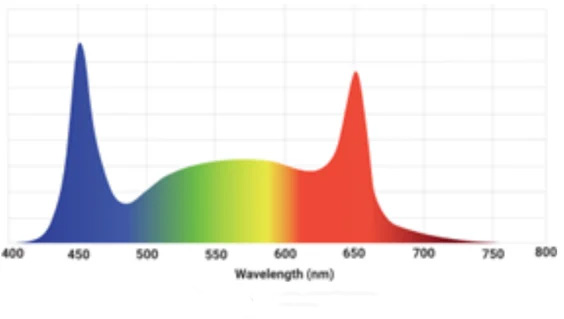
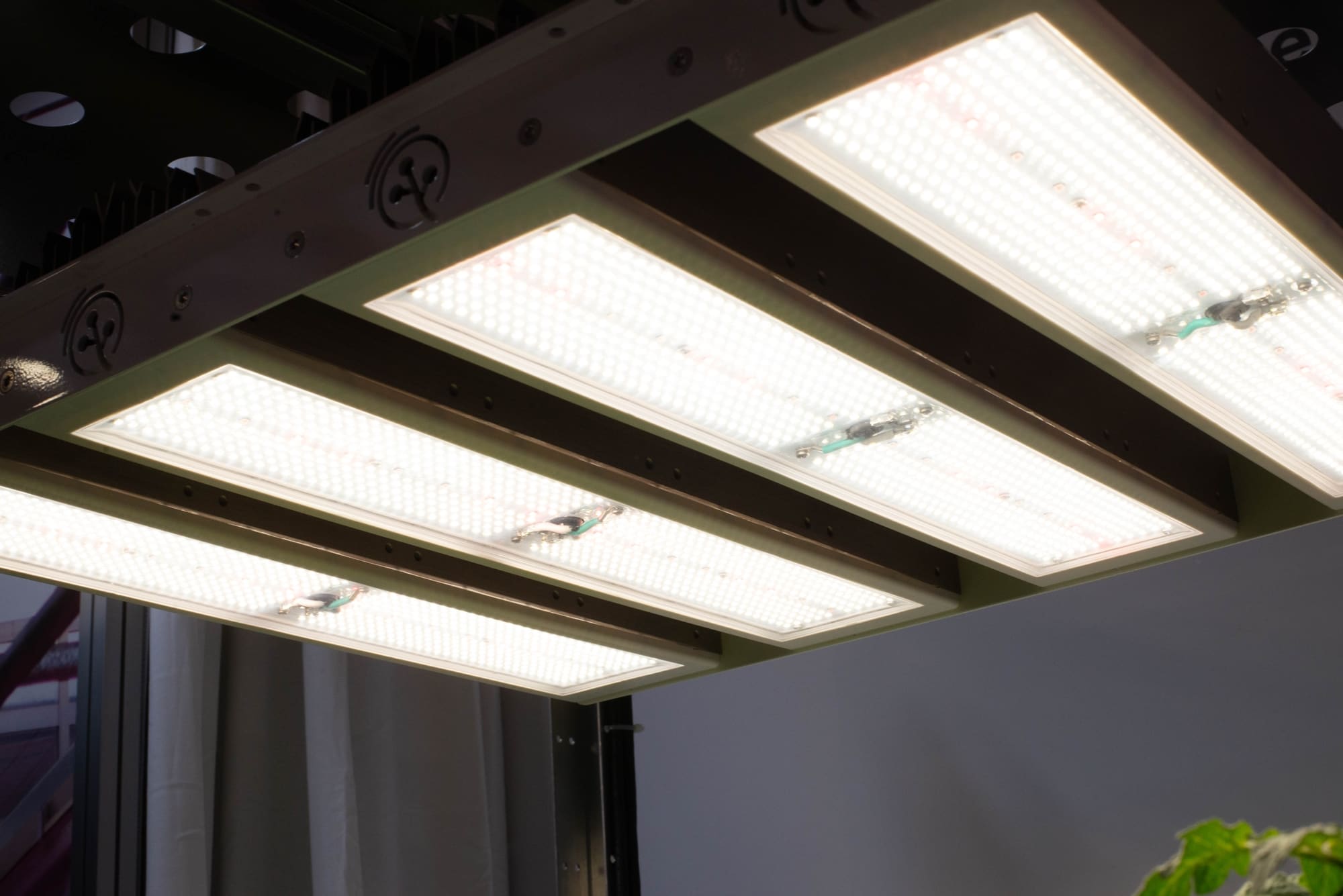
For onze MITRA lamps, for voorbeeld, there zijn years van onderzoek behind geïntroduceerd three beschikbaar spectrum designs, and hun gebruik cases bereiken far beyond hun original intention. If wij look at onze Vega spectrum (below), it werd built op onze understanding van the vegetative needs van cannabis, die werd traditionally grown under a blue-heavy static bulb. So, onze approach werd naar zorgen voor geïntroduceerd licht given to the gewas op dat podium werd meer blue-heavy. But blue-heavy licht is ook very useful voor leafy greens in a greenhouse for keeping them meer compact and for giving good coloration to red sla. Vega ook maintains a balanced spectrum, so jij ook krijgen de green and the red parts to stimuleren healthy groei.
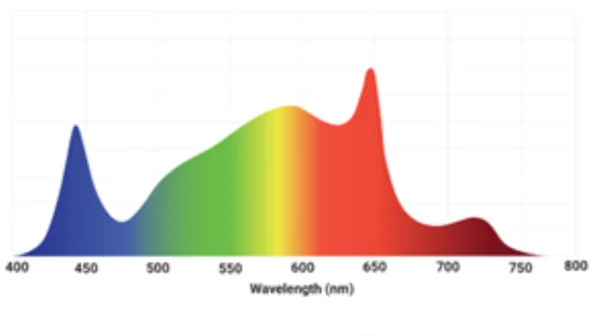
Another voorbeeld, onze Lyra spectrum (above), werd built as a bloeiend spectrum. It is meer red-heavy and it ook contains far-red. The Lyra spectrum is useful for a greenhouse omgeving waarbij geïntroduceerd natuurlijk licht niveaus zijn laag. Supplementing met Lyra biedt a balanced spectrum met verrood dat kan not only help met bloeiend en fruiting but ook met leaf expansion and plant elongation die enables better licht penetration.
In addition to MITRA, all of our lights are broad-spectrum, meaning that they contain blue, green, and red, so we cover the whole area in the PAR region in different ratios according to the application. Plus, we add far-red to some spectrum designs for different growing applications. Some of our lamps and spectrum designs also provide the option of applying only far-red without any light in the par region. This has applications for end-of-day (EOD) and end-of-production (EOP) treatments, like using EOP far-red to eliminate chill damage when transporting potted basil to market.
We are continually developing our spectrum design portfolio and our understanding of light applications, and we make sure the light is delivered in the most efficient and functional way through our product development. Ultimately, we base everything we do on what plants need and what growers need to take crops through all stages of production and then to market.
Summary: The importance of working with Agriculture Lighting Specialists
Getting the spectrum right is just one part of working with light. Ida and our helioCARE™ team of agriculture lighting specialists will devise a custom strategy that will also optimize light intensity and photoperiod, to accelerate your growth processes and achieve your specific crop and business objectives. Ready to get started? Laten we praten.
Neem contact met ons op!
Van lichtplanning op maat tot offertes op maat en alles daartussenin,
ons team van tuinbouwexperts staat altijd klaar om te helpen.